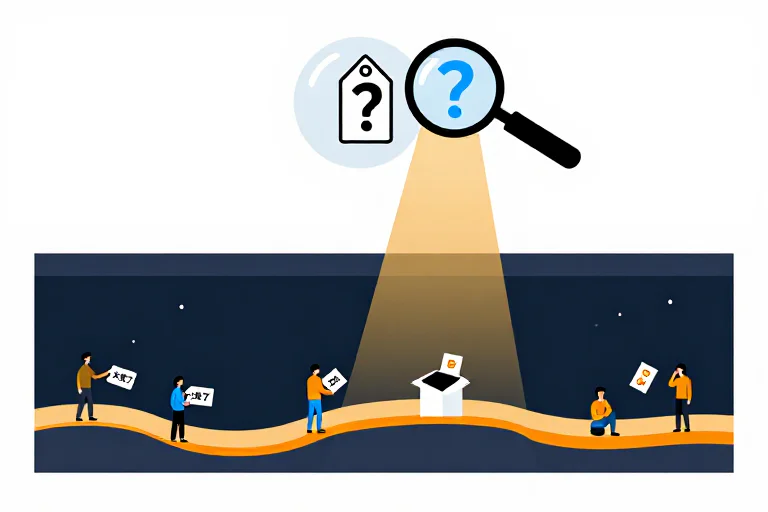
“Too expensive” looks like useful customer feedback.
It is not.
At least, not by itself.
A customer who says:
“This is too expensive.”
has told you what they decided to call the problem.
They have not necessarily told you what caused it.
They might genuinely be unable to afford the product.
They might think a competitor offers a better deal.
They might like the product but use it too infrequently to justify the price.
They might not understand why your product costs more.
They might have expected something different.
They might not trust the product enough to take the risk.
Or they might simply be the wrong customer for the offer.
Those are very different problems.
Yet they often get stored in exactly the same place:
Price objection.
This is where AI can become useful.
Not because AI can magically tell you the “real reason” behind every price objection.
Instead, AI can help you investigate the different explanations hidden inside a small, messy collection of customer feedback.
And that is much more valuable than asking:
“Should I lower my price?”
“Too Expensive” Is a Signal, Not a Diagnosis
Imagine that 30 out of 100 customers say your product is too expensive.
The obvious conclusion is:
Your price is too high.
But what exactly does “too high” mean?
There are at least several possibilities.
The customer cannot afford it
The absolute price is genuinely outside the customer's budget.
The customer does not perceive enough value
They can afford the product, but what they receive does not feel worth the price.
The customer expected something else
Your marketing created an expectation that the product did not meet.
The customer is comparing you with the wrong alternative
They may be comparing your product with a cheaper product that solves a different problem.
The customer does not trust the purchase enough
A higher price can feel much harder to justify when the perceived risk is high.
The customer does not use the product enough
A product can be objectively useful and still feel expensive when the customer only expects to use it occasionally.
The customer is simply not your customer
A premium offer will naturally feel expensive to some segments.
These possibilities matter because each one suggests a different response.
Lowering the price might help the first problem.
It could make the second problem worse.
And it may do almost nothing for the others.
Research on ecommerce pricing has similarly found that consumers' price tolerance is influenced by factors including perceived value, trust, satisfaction, and loyalty, with the relative importance depending on the product context.
So the useful question is not:
“Are customers saying the product is expensive?”
It is:
“What might customers actually mean when they say it is expensive?”
Why AI Is Especially Useful Here
Traditional analysis can tell you:
30 customers mentioned price.
That's useful.
You can also divide the reviews into:
positive / negative
or:
price / quality / shipping / features.
But the deeper question requires interpreting language in context.
Consider these three comments:
“Too expensive for something I would only use once.”
“I expected it to be higher quality at this price.”
“I can get a similar one for half the price.”
They all contain a price objection.
But the signals are completely different.
The first points toward usage frequency.
The second points toward expectation or perceived quality.
The third points toward competitive comparison.
A simple count might put all three under “price.”
An AI-assisted investigation can ask:
What distinguishes these customers?
What situations do they describe?
What are they comparing?
What did they expect?
What do they appear to value?
What alternative explanations remain?
That is where the analysis becomes Customer Intelligence.
Start With the Raw Customer Feedback
You do not need to build a complicated customer segmentation system first.
Start with the evidence.
This could be:
- product reviews
- customer support messages
- survey responses
- cancellation reasons
- return comments
- Reddit discussions
- social comments
- product questions
For an initial exploration, give AI the relevant text and ask it to identify the different ways customers express price resistance.
For example:
Analyze the following customer feedback for price-related objections.

Identify the different ways customers communicate that
the product is too expensive.

For each recurring pattern, identify:

1. What the customer explicitly says
2. What they appear to be comparing the price against
3. Their apparent usage context
4. Their expectations
5. Possible underlying reasons for the objection

Do not assume that every “too expensive” comment
has the same cause.

Separate customer statements from your interpretations.
Do not make a final recommendation yet.
Notice that the prompt does not ask:
“Why is my product too expensive?”
It asks AI to map the evidence first.
That's important.
Step 1: Ask AI to Find the Different Meanings of “Too Expensive”
After the first pass, focus only on customers mentioning:
- too expensive
- overpriced
- not worth the money
- too costly
- expensive for what it is
- not worth the price
Then ask AI to compare the contexts.
Focus only on customers expressing price dissatisfaction.

Group these customers by the underlying situation
described in their feedback.

Do not group them only by wording.

Look for differences in:

- customer type
- usage frequency
- use case
- expectations
- alternatives
- perceived benefits
- trust
- urgency
- product knowledge

For each group, explain why the customer may perceive
the same price differently.
This is where you may discover something unexpected.
Maybe customers who use the product every day are generally comfortable with the price.
Customers who use it once a month are not.
Now:
“too expensive”
might have less to do with the dollar amount and more to do with value per use.
That's a very different insight.
Step 2: Ask AI to Separate Price Sensitivity From Value Sensitivity
This distinction is especially useful.
A price-sensitive customer may be saying:
“I cannot justify spending this much.”
A value-sensitive customer may be saying:
“I don't see enough benefit to justify spending this much.”
The sentences can look similar.
The underlying situation is not.
Try:
For customers who describe the product as expensive,
distinguish between possible:

- budget constraints
- price sensitivity
- perceived-value concerns
- expectation gaps
- competitor comparisons
- trust or risk concerns
- usage-frequency concerns

For each pattern:

- provide supporting evidence
- identify contradictory evidence
- explain what is inferred rather than explicitly stated
- give alternative explanations
This is an important use of AI.
You're not asking it to magically read the customer's mind.
You're asking it to organize several plausible interpretations from the language and context available.
Step 3: Investigate What Customers Expected
Price only makes sense relative to expectations.
Consider two customers buying the same $100 product.
One says:
“Worth every penny.”
Another says:
“Completely overpriced.”
The difference may not be the price.
It may be what they thought they were buying.
Ask AI:
Analyze customers who describe the product as expensive.

Focus specifically on expectations.

Identify:

- What customers appear to have expected before purchasing
- What they expected the product to do
- What benefits they expected
- What level of quality they expected
- Whether the product description appears aligned with those expectations
- Where expectations and actual experience appear to diverge

Separate explicit evidence from inference.
This can uncover an expectation gap.
And an expectation gap can exist even when the price itself is reasonable.
Step 4: Investigate What Customers Compare You Against
Price is rarely interpreted in isolation.
Customers compare.
Sometimes consciously.
Sometimes implicitly.
A customer might compare your $80 product with:
a $30 alternative.
But they may also compare it with:
doing nothing
using an existing product
buying a completely different category
spending the money elsewhere
This is why asking:
“Who are our competitors?”
is not always enough.
You also want to know:
“What alternative does the customer think they are choosing between?”
Give AI the relevant reviews and ask:
Analyze customers who say this product is too expensive.

Identify every alternative they mention or imply.

Classify each alternative as:

- direct competitor
- lower-priced substitute
- different product category
- existing solution
- doing nothing
- other

Then explain how each alternative changes the customer's
perception of our price.

Do not assume that an alternative is a direct competitor
just because it solves a similar problem.
This can reveal a completely different competitive landscape.
Step 5: Ask AI About Customer Context
This is where AI can start doing something that simple price analysis usually cannot.
Suppose the same product receives these comments:
“Too expensive.”
“Worth every penny.”
Instead of asking:
Which statement is correct?
ask:
What is different about the customers making these statements?
You could ask AI:
Compare customers who consider this product expensive
with customers who consider it good value.

Identify differences in:

- usage scenario
- frequency of use
- customer goals
- urgency
- expectations
- customer profile
- alternatives considered
- perceived benefits
- emotional language

Identify patterns only when supported by multiple pieces
of evidence.
You may find that the “worth it” customers use the product every day, while the “too expensive” customers only need it occasionally.
Now you've found something much more useful:
The product may have a value-per-use problem for one customer scenario.
That's much more actionable than:
“Lower the price.”
Step 6: Use AI to Explore Customer Psychology
This is one of the areas where AI can add an unusual amount of value.
Customers do not always describe their psychological state directly.
They may say:
“I'm not sure this is worth it.”
“I don't know if I can justify the price.”
“I need to think about it.”
“It seems expensive for what you get.”
These statements can potentially indicate:
- uncertainty
- risk perception
- low confidence
- insufficient perceived value
- social comparison
- fear of making the wrong decision
- lack of urgency
You can ask AI to explore those possibilities:
Analyze the language used by customers who hesitate
because of price.

Look for potential signals related to:

- uncertainty
- perceived risk
- value sensitivity
- price sensitivity
- trust
- social validation
- fear of making the wrong choice
- confidence in the purchase

For each interpretation:

1. Show the supporting evidence.
2. Explain what is inferred.
3. Identify alternative explanations.
4. State what additional evidence would help validate it.

Do not present psychological interpretations as facts.
The last instruction matters.
AI can help you investigate psychology.
It cannot directly observe someone's internal state.
Step 7: Don't Ask AI to Decide Whether You Should Lower the Price
This is where many AI workflows go wrong.
A model sees:
“30% of customers say too expensive.”
And responds:
“Consider reducing your price.”
That's a decision built on incomplete information.
Instead, ask:
Based on the evidence, identify the main hypotheses
that could explain price objections.

For each hypothesis, tell me:

- supporting evidence
- contradictory evidence
- affected customer groups
- what additional evidence is needed
- what business decision would be affected

Do not recommend a price change yet.
Now you have an investigation map.
Maybe the strongest hypothesis is:
perceived value is unclear.
Maybe it is:
the wrong audience is being targeted.
Maybe it is:
competitors have established a lower reference price.
Maybe the evidence is insufficient.
All four outcomes are useful.
A Recent Example of Why “Too Expensive” Needs More Investigation
This isn't only a theoretical problem.
In a September 1, 2026 Reddit discussion, a founder described “too expensive” as a recurring churn reason and explicitly questioned whether the answer was actually to lower pricing. They identified several possible explanations, including insufficient usage, insufficient perceived value, competitor alternatives, and customers not seeing enough value quickly. The discussion then turned toward the need to investigate what customers actually mean by the price objection rather than treating the selected reason as the diagnosis.
Another recent Shopify-related discussion showed the inverse situation: a solo app developer was considering increasing prices after getting 57 paying merchants without direct price complaints, but was hesitant because the available conversion data was incomplete.
And an Amazon seller described launching substantially above category pricing and finding that stronger value communication and positioning could support the premium rather than making low price the only competitive strategy.
These are individual experiences, not proof of a universal pricing rule.
But they illustrate an important research problem:
The same price can produce very different customer reactions depending on context.
That's exactly the kind of ambiguity AI can help investigate.
Step 8: Cross-Validate the Price Objection
Suppose your reviews tell you:
“Too expensive.”
Do not immediately ask AI to read more reviews.
Bring it another source.
For example:
Reviews
“Too expensive for what you get.”
Customer support
Customers frequently ask whether a cheaper alternative exists.
People compare the product with a different category.
Now ask:
We previously identified several possible explanations
for price objections from customer reviews.

Here are customer support messages and Reddit discussions.

Compare the evidence across all three sources.

For each hypothesis:

- What evidence supports it?
- What evidence contradicts it?
- Which customer groups does it affect?
- Does the new evidence change the original interpretation?
- What remains uncertain?

Do not force the sources to agree.
This is the kind of cross-validation you described earlier.
You're not collecting more data just for the sake of having more data.
You're asking:
Does the same interpretation survive when we look at customers through a different channel?
Step 9: Ask Another AI to Challenge the Analysis
You don't have to trust the first model.
Suppose your first AI says:
“The product is perceived as expensive because customers don't understand its benefits.”
Take the analysis and give the underlying evidence to another model.
Ask:
Review this customer analysis.

The first model concluded that customers perceive
the product as expensive because its benefits are unclear.

Challenge this conclusion.

Identify:

- unsupported assumptions
- alternative explanations
- evidence that contradicts the conclusion
- customer groups where the conclusion may not apply
- additional evidence that would help determine which
explanation is stronger
Then you can return that critique to the first model.
Ask it:
Does the critique change your interpretation?
This doesn't produce mathematical certainty.
It gives you another layer of challenge.
And sometimes the most valuable outcome is discovering:
We don't actually have enough evidence to know yet.
That's intelligence too.
The Same Review Can Answer Different Questions
This is one of the reasons AI is particularly powerful for customer intelligence.
You don't have to rebuild the dataset every time you have a different research question.
The same 500 reviews can be explored through different lenses.
Price lens
Why do some customers perceive the product as expensive?
Scenario lens
In what situations does price matter most?
Psychology lens
What concerns appear to influence price resistance?
Competitive lens
What alternatives do customers compare against?
Value lens
What benefits appear to justify the price?
Product lens
Which product characteristics influence perceived value?
The dataset remains the same.
The investigation changes.
That is a fundamentally different way of using customer data from simply building one fixed dashboard.
Small Data Can Be Enough to Start the Investigation
You don't need thousands of price objections before doing this.
Suppose you only have 20 reviews.
Four customers say:
“Too expensive.”
That does not prove your price is too high.
It also does not prove that four customers represent a meaningful market segment.
But it does give you something:
a signal worth investigating.
You can ask:
Who are these four customers?
What were they trying to do?
What did they compare the product with?
What did they expect?
What other language appears around the objection?
Does the same pattern appear in customer support?
Does it appear in Reddit?
Now the small dataset becomes the starting point for research.
That's a very different philosophy from:
“Come back when you have enough data.”
Don't Use AI to Manufacture Certainty
This matters more when working with small datasets.
Suppose AI tells you:
“Customers are price-sensitive.”
Ask:
How do you know?
Then:
What evidence supports this interpretation?

What evidence contradicts it?

What alternative explanations could produce
the same customer behavior?

Which conclusions are directly supported,
which are plausible hypotheses, and which are speculative?
You want the model to distinguish:
Observation
6 customers described the price as too high.
Interpretation
These customers may perceive insufficient value.
Hypothesis
The product's benefits may not be sufficiently differentiated.
Decision
Change the pricing.
Those are four different levels.
AI can help you move between them.
It should not silently collapse them into one.
A Practical AI Workflow for “Too Expensive”
You can turn the entire investigation into a repeatable process.
Pass 1 — Find the signal
Ask AI to identify all price-related language.
Pass 2 — Group the meanings
Separate budget concerns, value concerns, competitor comparisons, expectations, trust, and usage-related concerns.
Pass 3 — Investigate context
Find out who expresses each pattern and in what situations.
Pass 4 — Explore psychology
Ask what motivations, concerns, or perceived risks may sit behind the language.
Pass 5 — Challenge
Ask the AI for alternative explanations.
Pass 6 — Cross-check
Bring in another source such as customer support, Reddit, surveys, or competitor reviews.
Pass 7 — Decide
Determine what the evidence is strong enough to support.
Notice what is missing:
“Ask AI whether we should lower the price.”
That question comes last, if it comes at all.
What AI Can Actually Change About Pricing Research
The most interesting benefit is not:
AI makes pricing analysis faster.
It is:
AI makes deeper investigation economically accessible to smaller businesses.
A company with a customer research team might spend weeks trying to understand why customers perceive an offer as expensive.
A small ecommerce business usually can't afford that.
But the small business may already have:
- reviews
- support messages
- product questions
- social discussions
- competitor reviews
AI can help the owner investigate those sources themselves.
Not perfectly.
Not automatically.
But deeply enough to discover hypotheses that would otherwise remain invisible.
That changes what a small team can investigate.
The Human Still Makes the Decision
This is the most important boundary.
AI can tell you:
“There are three plausible explanations.”
It can tell you:
“This explanation has stronger supporting evidence.”
It can tell you:
“This group behaves differently.”
It can tell you:
“We need another source of evidence.”
It can even suggest:
“A pricing change may not address the underlying problem.”
But the decision remains yours.
You know:
- your margins
- your product constraints
- your acquisition economics
- your brand
- your customers
- your risk tolerance
- your business objectives
AI provides another layer of intelligence.
It should not become the person running the business.
What “Too Expensive” Can Become With AI
Without deeper analysis:
30 customers said the product is too expensive.
After an AI-assisted investigation:
Most price complaints appear among infrequent users who compare the product with cheaper substitutes.
Then another source shows:
Those same customers also express uncertainty about how much value they will receive.
Then another source suggests:
Frequent users rarely mention price, but customers who purchased for occasional use do.
Now the question is no longer:
“Should we reduce the price?”
It becomes:
“Do we have a value-per-use problem for an occasional-use customer segment?”
That's a much better question.
And it may lead to a completely different response:
- different positioning
- different messaging
- a smaller package
- an entry offer
- a different target audience
- better education
- better proof of value
- or eventually a pricing change
The AI didn't choose the answer.
It helped make the problem visible.
The Bigger Idea
“Too expensive” is just one example.
The same method works with:
“Too difficult to use.”
“Not worth it.”
“Doesn't work as expected.”
“I need to think about it.”
“I don't trust this brand.”
“I couldn't find what I needed.”
“I bought a different product instead.”
Each statement is a customer signal.
AI can help you ask:
What is behind it?
Who experiences it?
In what situation?
What might they actually need?
What else could explain it?
Does another source support the same interpretation?
What should we investigate next?
That is much closer to Customer Intelligence than simply counting mentions.
Final Thought
When a customer says:
“Your product is too expensive.”
the easiest response is to change the price.
The more interesting response is to ask:
“What does expensive mean to this customer?”
Maybe it means:
“I can't afford it.”
Maybe:
“I don't see enough value.”
Maybe:
“I expected something different.”
Maybe:
“Your competitor feels safer.”
Maybe:
“I don't use this often enough.”
Maybe:
“I'm not the customer this product was designed for.”
AI can help you investigate those possibilities using the customer evidence you already have.
You don't need a large research department to start.
You need a good question, relevant evidence, and a willingness to keep asking better questions.
Don't ask AI whether your product is too expensive.
Ask AI to help you investigate what “too expensive” actually means.
Frequently Asked Questions
Why do customers say a product is too expensive?
“Too expensive” can reflect several different situations, including budget constraints, low perceived value, competitor comparisons, unmet expectations, insufficient trust, infrequent usage, or customer-product mismatch. The phrase alone does not identify the underlying cause.
Can AI analyze why customers think a product is too expensive?
AI can analyze customer reviews and other feedback for patterns involving price, value, expectations, usage context, alternatives, and customer concerns. The output should be treated as evidence-based interpretation or hypotheses rather than certainty.
How can ChatGPT analyze price objections?
Give ChatGPT relevant customer feedback and begin with a broad analysis of price-related language. Then progressively investigate customer context, perceived value, alternatives, expectations, and possible psychological drivers. Ask the model to separate explicit evidence from inference and to provide alternative explanations.
Should you lower your price when customers say it is too expensive?
Not automatically. A price objection can originate from perceived value, positioning, customer expectations, competitive alternatives, trust, usage frequency, or actual affordability. Investigating the underlying cause before changing price can prevent solving the wrong problem.
How can AI find hidden reasons behind customer objections?
Give AI the original customer statements and ask it to analyze the context surrounding each statement. Then investigate customer groups, usage scenarios, expectations, alternatives, motivations, and competing explanations rather than asking the model to provide one immediate conclusion.
Can AI analyze customer psychology from reviews?
AI can generate useful hypotheses about motivations, concerns, perceived value, uncertainty, and other psychological signals in customer language. These interpretations should be grounded in the available evidence and should not be treated as direct measurements of a customer's internal state.
Can you analyze price objections with only a small number of reviews?
Yes. A small dataset can reveal early signals and hypotheses worth investigating. It cannot automatically establish that the pattern represents the entire customer base, but it can help determine what questions to investigate next.
How should you validate an AI-generated customer insight?
Compare the interpretation with independent customer evidence such as support messages, social discussions, surveys, product questions, or competitor reviews. You can also ask another AI model to challenge the original interpretation and identify unsupported assumptions.
The Miyeta Approach
A customer objection is not the conclusion.
It is the beginning of an investigation.
Signal → Context → Interpretation → Alternative explanations → Cross-validation → Human decision
That is how AI can turn a simple phrase like “too expensive” into something much more useful: a deeper understanding of the customer behind it.