Research topic
Ecommerce Diagnosis & Analytics
Analytics tells you what changed. Diagnosis asks why. We use ecommerce metrics, customer signals, product performance, and AI-assisted reasoning to investigate conversion, retention, and growth problems.
Questions this research explores
Why did performance change?
Where is the customer journey breaking down?
What could explain a conversion problem?
Which signals deserve investigation before making a decision?
Research & analysis
Research on Ecommerce Diagnosis & Analytics

When Conversion Rate Drops, Don't Assume Something Is Wrong With Your Website
A drop in ecommerce conversion rate does not automatically mean your website is broken. Learn how to investigate conversion changes by connecting metrics with customer behavior, customer language, and other relevant evidence.

When the Numbers Aren’t Enough: Why Ecommerce Diagnosis Needs Customer Evidence
Ecommerce metrics can show that something changed, but they often cannot explain what customers experienced. Learn when customer evidence can strengthen an ecommerce investigation and how AI can help uncover deeper signals from unstructured data.

Why Small Ecommerce Stores Have a Different Analytics Problem
Small ecommerce stores don't simply have less data. They often have too little quantitative evidence for numbers to explain the business on their own. Here's why customer reviews, conversations, behavior, and other unstructured evidence can matter more.
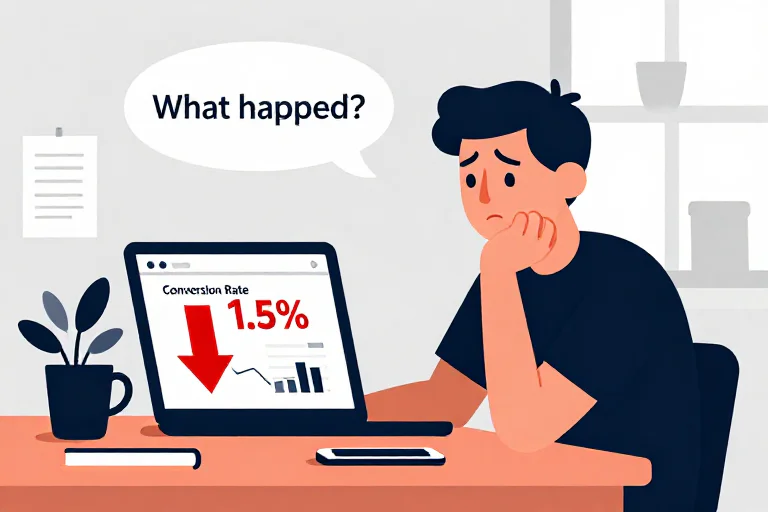
Your Ecommerce Dashboard Can Tell You What Changed. It Can't Tell You Why.
Ecommerce analytics can show that something changed, but the number itself rarely explains why. Learn how to investigate ecommerce problems using data as evidence, customer signals as context, and AI as a tool for deeper analysis.
Miyeta's approach
Use AI to investigate signals, not to replace judgment.
The goal is not to produce more summaries. It is to identify patterns, form useful hypotheses, understand what the evidence may mean, and make better ecommerce decisions.